Positioning Razorpay's Agentic AI Platform
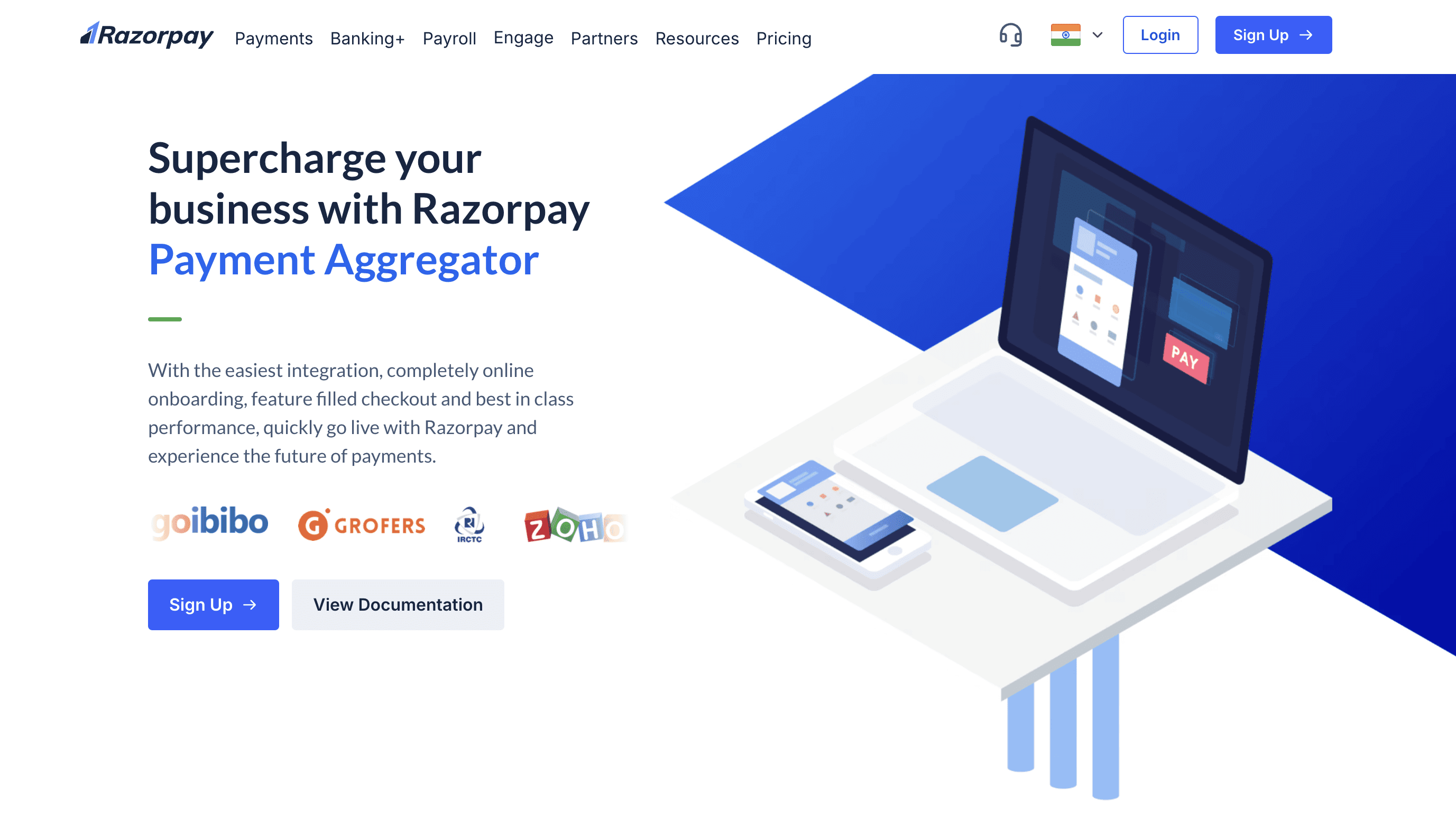
In this blog, I'm attempting to position Razorpay's newly launched Agentic AI platform
Insights
Feb 18, 2026
To build the positioning statement (April Dunford’s framework), we need the following 5 + 1 (bonus) params:
Competitive Alternatives
Unique Attributes
Value (and Proof)
Target Market Characteristics (Best-Fit Customers)
Market Category
(Bonus) Relevant Trends / Point of View
Positioning WorkBook
Core capabilities of the platform (given)
Razorpay Smart Assist (AI-powered product discovery across pages)
Conversational Onboarding (chat-based KYC/onboarding with an agent “Shreya”)
Copilot (IDE-native integration + “Migration mode” for Juspay UPI)
Agentic Dashboard (ask questions + trigger actions inside dashboard)
RAY (24/7 AI concierge + proactive alerts)
Top Competitors considered for this exercise:
PayU
Cashfree Payments
Now, let’s delve deep into building the positioning for Razorpay Agentic AI Platform.
1. Competitive Alternatives
This section answers, “If our product didn’t exist, what would our best customers realistically do instead?”
Before we go ahead and work on the competitive alternatives for the Razorpay Agentic platform, we need to identify some of the best-fit customers.
Why?
Because the objective is to also market to existing customers, we are considering some of the best-fit customers from the existing data. Since I don’t have the CRM or any customer access, I’ll use reference archetypes:
High-volume eCommerce /marketplace with a payments ops team (failed payments + reconciliation + chargebacks)
SaaS/subscriptions business with a dev team shipping payments + managing lifecycle events
Platform/aggregator onboarding many sub-merchants (KYC + activation at scale)
Mid-market enterprise with compliance + risk sensitivity (wants auditing and controls)
<aside> 💡
These are the customers for whom “intent → action” across onboarding/integration/ ops is material, not a nice-to-have.
</aside>
These are the realistic substitutes for the customers:
| Rank | Competitive Alternative | Description (Why is this a real alternative for our best customers?) | | --- | --- | --- | | 1 | Using another platforms such as Cashfree/PayU/CCAvenue | Customers find the tool, they read the API docs, and they open a support ticket if it breaks. | | 2 | Use Enterprise Orchestration like or DIY tool | Merchants use a technology layer like Juspay to manage multiple gateways, but they still inherit the manual "integration debt" and fragmented support of the underlying providers. | | 3 | Status quo + human ops | Merchants would manually parse through documentation, fill out long PDF/web forms for KYC, and wait days for manual validation. |
2. Unique Attributes
This matrix lists major features of the Razorpay Agentic AI platform and compares them with the competitive alternatives we derived in the previous section
Capability | Other payment platform | Manual ops + support | Orchestration / in-house | Is it Unique? |
|---|---|---|---|---|
Website-wide conversational discovery (“Smart Assist across pages”) | ❌ | ❌ | ❌ | Y |
Conversational onboarding (chat-based KYC flow) | ? (PayU claims prompt based setup) | ❌ | ❌ | Y |
IDE-native copilot plugin (in-IDE suggestions/testing/troubleshooting) | ✔️ (Cashien AI from Cashfree) | ❌ | ~ | N |
Juspay UPI-specific migration mapping mode | ❌ | ~ | ? (could be built internally) | Y |
In-dashboard conversational analytics (“ask your dashboard”) | ✔️ (PayU Edge claims LLM chat based dashboard ) | ❌ | ❌ | N |
In-dashboard chat action execution from prompt (create links, update GST) | ❌ | ❌ | ? (could be built internally) | Y |
24/7 AI concierge with account context. | ? (AI support automation claimed; “account-context + concierge” varies) (payu.in) | ~ (Not AI but, can have human concierge service) | ~ (Not AI but, can have human concierge service) | Y |
Proactive downtime/fraud risk alerts from agent layer | ✔️ (Cashfree has AI Risk detection) | ~ | ✔ / ? (often built for scale) | N |
Final List of Unique Attributes
Website-wide conversation-based product discovery → helps users to easily identify what products they need instead of combing through the whole suite.
Conversational onboarding that validates docs + clarifies compliance in-flow → reduces onboarding friction by changing the interface from forms to dialogue.
Juspay UPI-specific migration mapping mode → not generic “migration help” that automatically maps legacy logic to Razorpay infra.
Prompt-to-action inside the dashboard → the agent doesn’t just answer; it can execute actions like creating payment links and updating GST details.
Account-context based concierge + proactive risk/downtime alerts → support becomes contextual and preventive, not ticket-based
3. Value Benefits
Value Theme | Supporting Value Points |
|---|---|
Faster time-to-revenue | Faster product discovery & onboarding → faster go-live; faster ops actions → faster collections; safer migration → fewer conversion dips. |
Lower cost of running payments | Fewer support tickets; fewer ops hours; fewer engineering cycles burned in migration/rework. |
Lower operational and compliance risk | Real-time validation during onboarding; reduced migration regressions; fewer manual errors from dashboard workflows. |
4. Target Market Characteristics
“Payments-ops constrained scale-ups” in India:
Digital-first businesses (D2C/marketplaces/SaaS/platforms) typically have 50–2000 employees
Processing meaningful transaction volume where settlements, refunds, disputes, GST, and downtime are weekly realities
Have lean teams: 1–3 people in payments engineering + ops/finance stretched thin
Already using (or evaluating) a full-stack payments provider and cares about speed-to-live + ongoing reliability + support burden
Specific pain points (why they care)
Onboarding drag: KYC confusion, doc errors, and resubmissions slow down activation.
Operational friction: too many clicks, exports, and tickets for common tasks like settlements, payment links, and GST updates.
Support bottlenecks: resolution depends on tickets; answers lack account context.
Incident anxiety: bank downtimes/fraud risks hit revenue; they want proactive detection and fast mitigation.
The primary buyer/user set
Economic buyers/champions: Founder/COO, CFO/Finance Head
Primary daily users: Ops/Finance Ops, Support Lead
Strong influencer: Payments/Engineering manager (especially for migration moments, even if IDE Copilot isn’t unique)
5. Market Category
April Dunford recommends choosing a style: Head-to-Head, Big Fish/Small Pond, or Create a New Game
Potential Market Category | Pros (helpful assumptions) | Cons (harmful assumptions) |
|---|---|---|
Payments Platform | Well-understood; established budgets/buyers; instantly signals “core money rails + dashboard.” Makes comparisons to incumbents like PayU, Cashfree Payments, Paytm feel natural. | Frames evaluation around commodity metrics (pricing, MDR, success rate, settlement times) and can bury the “agentic ops” advantage as “nice-to-have add-on.” |
Payment Gateway | Very clear and narrow; low confusion for SMBs; maps to a single purchase decision. | Too small a box: makes “agentic lifecycle” capabilities feel like scope creep; triggers “just a gateway feature” assumptions, reducing perceived strategic value. |
AI Payments Copilot | Immediately highlights “AI layer” and conversational workflow; sets expectation of speed and assistance (onboarding/support). | Risk of being dismissed as a chatbot/tool; triggers “thin wrapper on support/docs” skepticism—especially if competitors can claim similar “AI assistants.” Global mental comps become Stripe / generic copilots rather than “payments ops execution.” |
Payments Operations Platform | Strong fit to our value themes (lower ops cost, faster action, lower risk). Moves buyer lens to ops workflows: reconciliation, compliance updates, incident response, ticket deflection. | Might be perceived as “bolt-on ops tool” separate from the payments rails (like an analytics layer), raising the question: “Do I still need a gateway/platform underneath?” |
Agentic Payments Operations Platform | Best spotlights the unique attributes that matter (prompt→action inside dashboard, conversational onboarding, account-context concierge, specialized migration). Signals “does the actual work, not just answers.” | Newer mental model: requires a bit of education and crisp proof; also the competitors aren’t there yet. This might invite competitors to claim “we’re agentic too,” so we need tight boundaries on what “agentic” means (actions + governance). |
Based on the value themes we have arrived at, I feel Agentic Payments Operations Platform is the top pick as it directly highlights prompt→action, “ops compression,” proactive risk, and onboarding acceleration.
This also ensures that we are not moving away from the primary market category of “Payments Platform” where Razorpay is already a market leader.
Decision | Selection |
|---|---|
Positioning Style | Big Fish, Small Pond → compete within the existing “Payments Platform” market, but dominate the subsegment of agentic payments operations (where incumbents aren’t there yet). |
Final Market Category | Agentic Payments Operations Platform (positioned as the next evolution of a payments platform for scaleups) |
6. Relevant Trends/ Point of View
In the AI era, every team is compressing cycle time: shipping faster, automating ops, and moving decisions closer to real time. Payments is the lagging layer, ****still full of forms, tickets, and manual monitoring.
What’s “due” for change isn’t the gateway API. It’s the workflow around money movement:
Days-long onboarding/KYC loops because people don’t know what docs are “right” until they’re rejected.
Manual fraud and downtime monitoring that catches issues after revenue is already hit.
Ticket cycles to answer basic account questions that should be self-serve and contextual.
AI finally makes this solvable not by “adding a chatbot,” but by turning the payments stack into a system that can take approved actions.
Why now?
Merchants expect self-serve resolution and instant clarity (not ticket queues).
AI has matured from “just chat” to action-oriented outcomes (tools/function calling), making it viable to automate workflows safely.
Competitive parity on basic rails is rising, so the winner is the platform that reduces time-to-live + cost-to-operate + incident impact.
De-positioning (What do we NOT want to be)
We don’t want to be known as an “AI-powered Payments Platform”.
Razorpay is the market leader in the payments space. So, I am not repositioning the company away from “payments platform.” I’m positioning it as the new Agentic Payments Ops Platform so it doesn’t get flattened into “yet another AI feature.”
Why?
AI is not differentiating anymore.
“AI-powered” is now table-stakes language in payments. If we lead with that, we invite a me-too comparison where everyone sounds the same.
It keeps the buyer’s evaluation criteria stuck in commodity-land.
“Payments platform” triggers comparisons on MDR/pricing, uptime, settlement timelines, feature checklists – areas where the AI layer becomes “nice-to-have.”
It creates chatbot skepticism.
“AI-powered” often gets interpreted as “support bot + FAQs,” especially if competitors already market AI assistants. We’ll spend our narrative budget proving it’s not fluff.
More to Discover

Positioning Razorpay's Agentic AI Platform
In this blog, I'm attempting to position Razorpay's newly launched Agentic AI platform
Insights
Feb 18, 2026
To build the positioning statement (April Dunford’s framework), we need the following 5 + 1 (bonus) params:
Competitive Alternatives
Unique Attributes
Value (and Proof)
Target Market Characteristics (Best-Fit Customers)
Market Category
(Bonus) Relevant Trends / Point of View
Positioning WorkBook
Core capabilities of the platform (given)
Razorpay Smart Assist (AI-powered product discovery across pages)
Conversational Onboarding (chat-based KYC/onboarding with an agent “Shreya”)
Copilot (IDE-native integration + “Migration mode” for Juspay UPI)
Agentic Dashboard (ask questions + trigger actions inside dashboard)
RAY (24/7 AI concierge + proactive alerts)
Top Competitors considered for this exercise:
PayU
Cashfree Payments
Now, let’s delve deep into building the positioning for Razorpay Agentic AI Platform.
1. Competitive Alternatives
This section answers, “If our product didn’t exist, what would our best customers realistically do instead?”
Before we go ahead and work on the competitive alternatives for the Razorpay Agentic platform, we need to identify some of the best-fit customers.
Why?
Because the objective is to also market to existing customers, we are considering some of the best-fit customers from the existing data. Since I don’t have the CRM or any customer access, I’ll use reference archetypes:
High-volume eCommerce /marketplace with a payments ops team (failed payments + reconciliation + chargebacks)
SaaS/subscriptions business with a dev team shipping payments + managing lifecycle events
Platform/aggregator onboarding many sub-merchants (KYC + activation at scale)
Mid-market enterprise with compliance + risk sensitivity (wants auditing and controls)
<aside> 💡
These are the customers for whom “intent → action” across onboarding/integration/ ops is material, not a nice-to-have.
</aside>
These are the realistic substitutes for the customers:
| Rank | Competitive Alternative | Description (Why is this a real alternative for our best customers?) | | --- | --- | --- | | 1 | Using another platforms such as Cashfree/PayU/CCAvenue | Customers find the tool, they read the API docs, and they open a support ticket if it breaks. | | 2 | Use Enterprise Orchestration like or DIY tool | Merchants use a technology layer like Juspay to manage multiple gateways, but they still inherit the manual "integration debt" and fragmented support of the underlying providers. | | 3 | Status quo + human ops | Merchants would manually parse through documentation, fill out long PDF/web forms for KYC, and wait days for manual validation. |
2. Unique Attributes
This matrix lists major features of the Razorpay Agentic AI platform and compares them with the competitive alternatives we derived in the previous section
Capability | Other payment platform | Manual ops + support | Orchestration / in-house | Is it Unique? |
|---|---|---|---|---|
Website-wide conversational discovery (“Smart Assist across pages”) | ❌ | ❌ | ❌ | Y |
Conversational onboarding (chat-based KYC flow) | ? (PayU claims prompt based setup) | ❌ | ❌ | Y |
IDE-native copilot plugin (in-IDE suggestions/testing/troubleshooting) | ✔️ (Cashien AI from Cashfree) | ❌ | ~ | N |
Juspay UPI-specific migration mapping mode | ❌ | ~ | ? (could be built internally) | Y |
In-dashboard conversational analytics (“ask your dashboard”) | ✔️ (PayU Edge claims LLM chat based dashboard ) | ❌ | ❌ | N |
In-dashboard chat action execution from prompt (create links, update GST) | ❌ | ❌ | ? (could be built internally) | Y |
24/7 AI concierge with account context. | ? (AI support automation claimed; “account-context + concierge” varies) (payu.in) | ~ (Not AI but, can have human concierge service) | ~ (Not AI but, can have human concierge service) | Y |
Proactive downtime/fraud risk alerts from agent layer | ✔️ (Cashfree has AI Risk detection) | ~ | ✔ / ? (often built for scale) | N |
Final List of Unique Attributes
Website-wide conversation-based product discovery → helps users to easily identify what products they need instead of combing through the whole suite.
Conversational onboarding that validates docs + clarifies compliance in-flow → reduces onboarding friction by changing the interface from forms to dialogue.
Juspay UPI-specific migration mapping mode → not generic “migration help” that automatically maps legacy logic to Razorpay infra.
Prompt-to-action inside the dashboard → the agent doesn’t just answer; it can execute actions like creating payment links and updating GST details.
Account-context based concierge + proactive risk/downtime alerts → support becomes contextual and preventive, not ticket-based
3. Value Benefits
Value Theme | Supporting Value Points |
|---|---|
Faster time-to-revenue | Faster product discovery & onboarding → faster go-live; faster ops actions → faster collections; safer migration → fewer conversion dips. |
Lower cost of running payments | Fewer support tickets; fewer ops hours; fewer engineering cycles burned in migration/rework. |
Lower operational and compliance risk | Real-time validation during onboarding; reduced migration regressions; fewer manual errors from dashboard workflows. |
4. Target Market Characteristics
“Payments-ops constrained scale-ups” in India:
Digital-first businesses (D2C/marketplaces/SaaS/platforms) typically have 50–2000 employees
Processing meaningful transaction volume where settlements, refunds, disputes, GST, and downtime are weekly realities
Have lean teams: 1–3 people in payments engineering + ops/finance stretched thin
Already using (or evaluating) a full-stack payments provider and cares about speed-to-live + ongoing reliability + support burden
Specific pain points (why they care)
Onboarding drag: KYC confusion, doc errors, and resubmissions slow down activation.
Operational friction: too many clicks, exports, and tickets for common tasks like settlements, payment links, and GST updates.
Support bottlenecks: resolution depends on tickets; answers lack account context.
Incident anxiety: bank downtimes/fraud risks hit revenue; they want proactive detection and fast mitigation.
The primary buyer/user set
Economic buyers/champions: Founder/COO, CFO/Finance Head
Primary daily users: Ops/Finance Ops, Support Lead
Strong influencer: Payments/Engineering manager (especially for migration moments, even if IDE Copilot isn’t unique)
5. Market Category
April Dunford recommends choosing a style: Head-to-Head, Big Fish/Small Pond, or Create a New Game
Potential Market Category | Pros (helpful assumptions) | Cons (harmful assumptions) |
|---|---|---|
Payments Platform | Well-understood; established budgets/buyers; instantly signals “core money rails + dashboard.” Makes comparisons to incumbents like PayU, Cashfree Payments, Paytm feel natural. | Frames evaluation around commodity metrics (pricing, MDR, success rate, settlement times) and can bury the “agentic ops” advantage as “nice-to-have add-on.” |
Payment Gateway | Very clear and narrow; low confusion for SMBs; maps to a single purchase decision. | Too small a box: makes “agentic lifecycle” capabilities feel like scope creep; triggers “just a gateway feature” assumptions, reducing perceived strategic value. |
AI Payments Copilot | Immediately highlights “AI layer” and conversational workflow; sets expectation of speed and assistance (onboarding/support). | Risk of being dismissed as a chatbot/tool; triggers “thin wrapper on support/docs” skepticism—especially if competitors can claim similar “AI assistants.” Global mental comps become Stripe / generic copilots rather than “payments ops execution.” |
Payments Operations Platform | Strong fit to our value themes (lower ops cost, faster action, lower risk). Moves buyer lens to ops workflows: reconciliation, compliance updates, incident response, ticket deflection. | Might be perceived as “bolt-on ops tool” separate from the payments rails (like an analytics layer), raising the question: “Do I still need a gateway/platform underneath?” |
Agentic Payments Operations Platform | Best spotlights the unique attributes that matter (prompt→action inside dashboard, conversational onboarding, account-context concierge, specialized migration). Signals “does the actual work, not just answers.” | Newer mental model: requires a bit of education and crisp proof; also the competitors aren’t there yet. This might invite competitors to claim “we’re agentic too,” so we need tight boundaries on what “agentic” means (actions + governance). |
Based on the value themes we have arrived at, I feel Agentic Payments Operations Platform is the top pick as it directly highlights prompt→action, “ops compression,” proactive risk, and onboarding acceleration.
This also ensures that we are not moving away from the primary market category of “Payments Platform” where Razorpay is already a market leader.
Decision | Selection |
|---|---|
Positioning Style | Big Fish, Small Pond → compete within the existing “Payments Platform” market, but dominate the subsegment of agentic payments operations (where incumbents aren’t there yet). |
Final Market Category | Agentic Payments Operations Platform (positioned as the next evolution of a payments platform for scaleups) |
6. Relevant Trends/ Point of View
In the AI era, every team is compressing cycle time: shipping faster, automating ops, and moving decisions closer to real time. Payments is the lagging layer, ****still full of forms, tickets, and manual monitoring.
What’s “due” for change isn’t the gateway API. It’s the workflow around money movement:
Days-long onboarding/KYC loops because people don’t know what docs are “right” until they’re rejected.
Manual fraud and downtime monitoring that catches issues after revenue is already hit.
Ticket cycles to answer basic account questions that should be self-serve and contextual.
AI finally makes this solvable not by “adding a chatbot,” but by turning the payments stack into a system that can take approved actions.
Why now?
Merchants expect self-serve resolution and instant clarity (not ticket queues).
AI has matured from “just chat” to action-oriented outcomes (tools/function calling), making it viable to automate workflows safely.
Competitive parity on basic rails is rising, so the winner is the platform that reduces time-to-live + cost-to-operate + incident impact.
De-positioning (What do we NOT want to be)
We don’t want to be known as an “AI-powered Payments Platform”.
Razorpay is the market leader in the payments space. So, I am not repositioning the company away from “payments platform.” I’m positioning it as the new Agentic Payments Ops Platform so it doesn’t get flattened into “yet another AI feature.”
Why?
AI is not differentiating anymore.
“AI-powered” is now table-stakes language in payments. If we lead with that, we invite a me-too comparison where everyone sounds the same.
It keeps the buyer’s evaluation criteria stuck in commodity-land.
“Payments platform” triggers comparisons on MDR/pricing, uptime, settlement timelines, feature checklists – areas where the AI layer becomes “nice-to-have.”
It creates chatbot skepticism.
“AI-powered” often gets interpreted as “support bot + FAQs,” especially if competitors already market AI assistants. We’ll spend our narrative budget proving it’s not fluff.
More to Discover
Positioning Razorpay's Agentic AI Platform
In this blog, I'm attempting to position Razorpay's newly launched Agentic AI platform
Insights
Feb 18, 2026
To build the positioning statement (April Dunford’s framework), we need the following 5 + 1 (bonus) params:
Competitive Alternatives
Unique Attributes
Value (and Proof)
Target Market Characteristics (Best-Fit Customers)
Market Category
(Bonus) Relevant Trends / Point of View
Positioning WorkBook
Core capabilities of the platform (given)
Razorpay Smart Assist (AI-powered product discovery across pages)
Conversational Onboarding (chat-based KYC/onboarding with an agent “Shreya”)
Copilot (IDE-native integration + “Migration mode” for Juspay UPI)
Agentic Dashboard (ask questions + trigger actions inside dashboard)
RAY (24/7 AI concierge + proactive alerts)
Top Competitors considered for this exercise:
PayU
Cashfree Payments
Now, let’s delve deep into building the positioning for Razorpay Agentic AI Platform.
1. Competitive Alternatives
This section answers, “If our product didn’t exist, what would our best customers realistically do instead?”
Before we go ahead and work on the competitive alternatives for the Razorpay Agentic platform, we need to identify some of the best-fit customers.
Why?
Because the objective is to also market to existing customers, we are considering some of the best-fit customers from the existing data. Since I don’t have the CRM or any customer access, I’ll use reference archetypes:
High-volume eCommerce /marketplace with a payments ops team (failed payments + reconciliation + chargebacks)
SaaS/subscriptions business with a dev team shipping payments + managing lifecycle events
Platform/aggregator onboarding many sub-merchants (KYC + activation at scale)
Mid-market enterprise with compliance + risk sensitivity (wants auditing and controls)
<aside> 💡
These are the customers for whom “intent → action” across onboarding/integration/ ops is material, not a nice-to-have.
</aside>
These are the realistic substitutes for the customers:
| Rank | Competitive Alternative | Description (Why is this a real alternative for our best customers?) | | --- | --- | --- | | 1 | Using another platforms such as Cashfree/PayU/CCAvenue | Customers find the tool, they read the API docs, and they open a support ticket if it breaks. | | 2 | Use Enterprise Orchestration like or DIY tool | Merchants use a technology layer like Juspay to manage multiple gateways, but they still inherit the manual "integration debt" and fragmented support of the underlying providers. | | 3 | Status quo + human ops | Merchants would manually parse through documentation, fill out long PDF/web forms for KYC, and wait days for manual validation. |
2. Unique Attributes
This matrix lists major features of the Razorpay Agentic AI platform and compares them with the competitive alternatives we derived in the previous section
Capability | Other payment platform | Manual ops + support | Orchestration / in-house | Is it Unique? |
|---|---|---|---|---|
Website-wide conversational discovery (“Smart Assist across pages”) | ❌ | ❌ | ❌ | Y |
Conversational onboarding (chat-based KYC flow) | ? (PayU claims prompt based setup) | ❌ | ❌ | Y |
IDE-native copilot plugin (in-IDE suggestions/testing/troubleshooting) | ✔️ (Cashien AI from Cashfree) | ❌ | ~ | N |
Juspay UPI-specific migration mapping mode | ❌ | ~ | ? (could be built internally) | Y |
In-dashboard conversational analytics (“ask your dashboard”) | ✔️ (PayU Edge claims LLM chat based dashboard ) | ❌ | ❌ | N |
In-dashboard chat action execution from prompt (create links, update GST) | ❌ | ❌ | ? (could be built internally) | Y |
24/7 AI concierge with account context. | ? (AI support automation claimed; “account-context + concierge” varies) (payu.in) | ~ (Not AI but, can have human concierge service) | ~ (Not AI but, can have human concierge service) | Y |
Proactive downtime/fraud risk alerts from agent layer | ✔️ (Cashfree has AI Risk detection) | ~ | ✔ / ? (often built for scale) | N |
Final List of Unique Attributes
Website-wide conversation-based product discovery → helps users to easily identify what products they need instead of combing through the whole suite.
Conversational onboarding that validates docs + clarifies compliance in-flow → reduces onboarding friction by changing the interface from forms to dialogue.
Juspay UPI-specific migration mapping mode → not generic “migration help” that automatically maps legacy logic to Razorpay infra.
Prompt-to-action inside the dashboard → the agent doesn’t just answer; it can execute actions like creating payment links and updating GST details.
Account-context based concierge + proactive risk/downtime alerts → support becomes contextual and preventive, not ticket-based
3. Value Benefits
Value Theme | Supporting Value Points |
|---|---|
Faster time-to-revenue | Faster product discovery & onboarding → faster go-live; faster ops actions → faster collections; safer migration → fewer conversion dips. |
Lower cost of running payments | Fewer support tickets; fewer ops hours; fewer engineering cycles burned in migration/rework. |
Lower operational and compliance risk | Real-time validation during onboarding; reduced migration regressions; fewer manual errors from dashboard workflows. |
4. Target Market Characteristics
“Payments-ops constrained scale-ups” in India:
Digital-first businesses (D2C/marketplaces/SaaS/platforms) typically have 50–2000 employees
Processing meaningful transaction volume where settlements, refunds, disputes, GST, and downtime are weekly realities
Have lean teams: 1–3 people in payments engineering + ops/finance stretched thin
Already using (or evaluating) a full-stack payments provider and cares about speed-to-live + ongoing reliability + support burden
Specific pain points (why they care)
Onboarding drag: KYC confusion, doc errors, and resubmissions slow down activation.
Operational friction: too many clicks, exports, and tickets for common tasks like settlements, payment links, and GST updates.
Support bottlenecks: resolution depends on tickets; answers lack account context.
Incident anxiety: bank downtimes/fraud risks hit revenue; they want proactive detection and fast mitigation.
The primary buyer/user set
Economic buyers/champions: Founder/COO, CFO/Finance Head
Primary daily users: Ops/Finance Ops, Support Lead
Strong influencer: Payments/Engineering manager (especially for migration moments, even if IDE Copilot isn’t unique)
5. Market Category
April Dunford recommends choosing a style: Head-to-Head, Big Fish/Small Pond, or Create a New Game
Potential Market Category | Pros (helpful assumptions) | Cons (harmful assumptions) |
|---|---|---|
Payments Platform | Well-understood; established budgets/buyers; instantly signals “core money rails + dashboard.” Makes comparisons to incumbents like PayU, Cashfree Payments, Paytm feel natural. | Frames evaluation around commodity metrics (pricing, MDR, success rate, settlement times) and can bury the “agentic ops” advantage as “nice-to-have add-on.” |
Payment Gateway | Very clear and narrow; low confusion for SMBs; maps to a single purchase decision. | Too small a box: makes “agentic lifecycle” capabilities feel like scope creep; triggers “just a gateway feature” assumptions, reducing perceived strategic value. |
AI Payments Copilot | Immediately highlights “AI layer” and conversational workflow; sets expectation of speed and assistance (onboarding/support). | Risk of being dismissed as a chatbot/tool; triggers “thin wrapper on support/docs” skepticism—especially if competitors can claim similar “AI assistants.” Global mental comps become Stripe / generic copilots rather than “payments ops execution.” |
Payments Operations Platform | Strong fit to our value themes (lower ops cost, faster action, lower risk). Moves buyer lens to ops workflows: reconciliation, compliance updates, incident response, ticket deflection. | Might be perceived as “bolt-on ops tool” separate from the payments rails (like an analytics layer), raising the question: “Do I still need a gateway/platform underneath?” |
Agentic Payments Operations Platform | Best spotlights the unique attributes that matter (prompt→action inside dashboard, conversational onboarding, account-context concierge, specialized migration). Signals “does the actual work, not just answers.” | Newer mental model: requires a bit of education and crisp proof; also the competitors aren’t there yet. This might invite competitors to claim “we’re agentic too,” so we need tight boundaries on what “agentic” means (actions + governance). |
Based on the value themes we have arrived at, I feel Agentic Payments Operations Platform is the top pick as it directly highlights prompt→action, “ops compression,” proactive risk, and onboarding acceleration.
This also ensures that we are not moving away from the primary market category of “Payments Platform” where Razorpay is already a market leader.
Decision | Selection |
|---|---|
Positioning Style | Big Fish, Small Pond → compete within the existing “Payments Platform” market, but dominate the subsegment of agentic payments operations (where incumbents aren’t there yet). |
Final Market Category | Agentic Payments Operations Platform (positioned as the next evolution of a payments platform for scaleups) |
6. Relevant Trends/ Point of View
In the AI era, every team is compressing cycle time: shipping faster, automating ops, and moving decisions closer to real time. Payments is the lagging layer, ****still full of forms, tickets, and manual monitoring.
What’s “due” for change isn’t the gateway API. It’s the workflow around money movement:
Days-long onboarding/KYC loops because people don’t know what docs are “right” until they’re rejected.
Manual fraud and downtime monitoring that catches issues after revenue is already hit.
Ticket cycles to answer basic account questions that should be self-serve and contextual.
AI finally makes this solvable not by “adding a chatbot,” but by turning the payments stack into a system that can take approved actions.
Why now?
Merchants expect self-serve resolution and instant clarity (not ticket queues).
AI has matured from “just chat” to action-oriented outcomes (tools/function calling), making it viable to automate workflows safely.
Competitive parity on basic rails is rising, so the winner is the platform that reduces time-to-live + cost-to-operate + incident impact.
De-positioning (What do we NOT want to be)
We don’t want to be known as an “AI-powered Payments Platform”.
Razorpay is the market leader in the payments space. So, I am not repositioning the company away from “payments platform.” I’m positioning it as the new Agentic Payments Ops Platform so it doesn’t get flattened into “yet another AI feature.”
Why?
AI is not differentiating anymore.
“AI-powered” is now table-stakes language in payments. If we lead with that, we invite a me-too comparison where everyone sounds the same.
It keeps the buyer’s evaluation criteria stuck in commodity-land.
“Payments platform” triggers comparisons on MDR/pricing, uptime, settlement timelines, feature checklists – areas where the AI layer becomes “nice-to-have.”
It creates chatbot skepticism.
“AI-powered” often gets interpreted as “support bot + FAQs,” especially if competitors already market AI assistants. We’ll spend our narrative budget proving it’s not fluff.